The Illicit Logging of Mukula in Luapula
Mukula is a rare African tree and one of the rosewood species protected under the Convention on International Trade in Endangered Species of Wild Fauna and Flora (CITES). Illicit and unsustainable harvesting of this precious timber has led to the destruction...
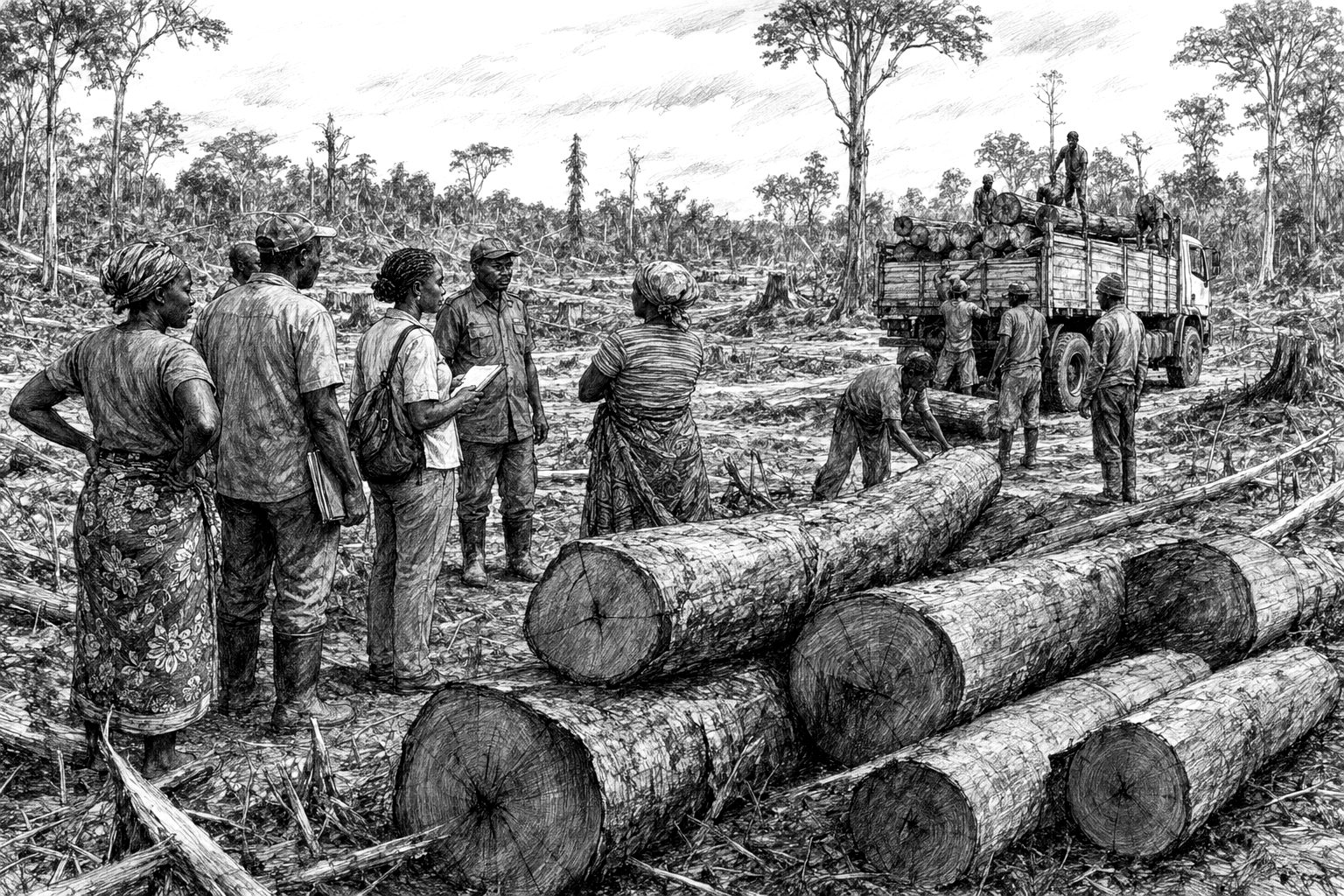 Black-and-white sketch treatment based on supplied Mukula logging reference art.
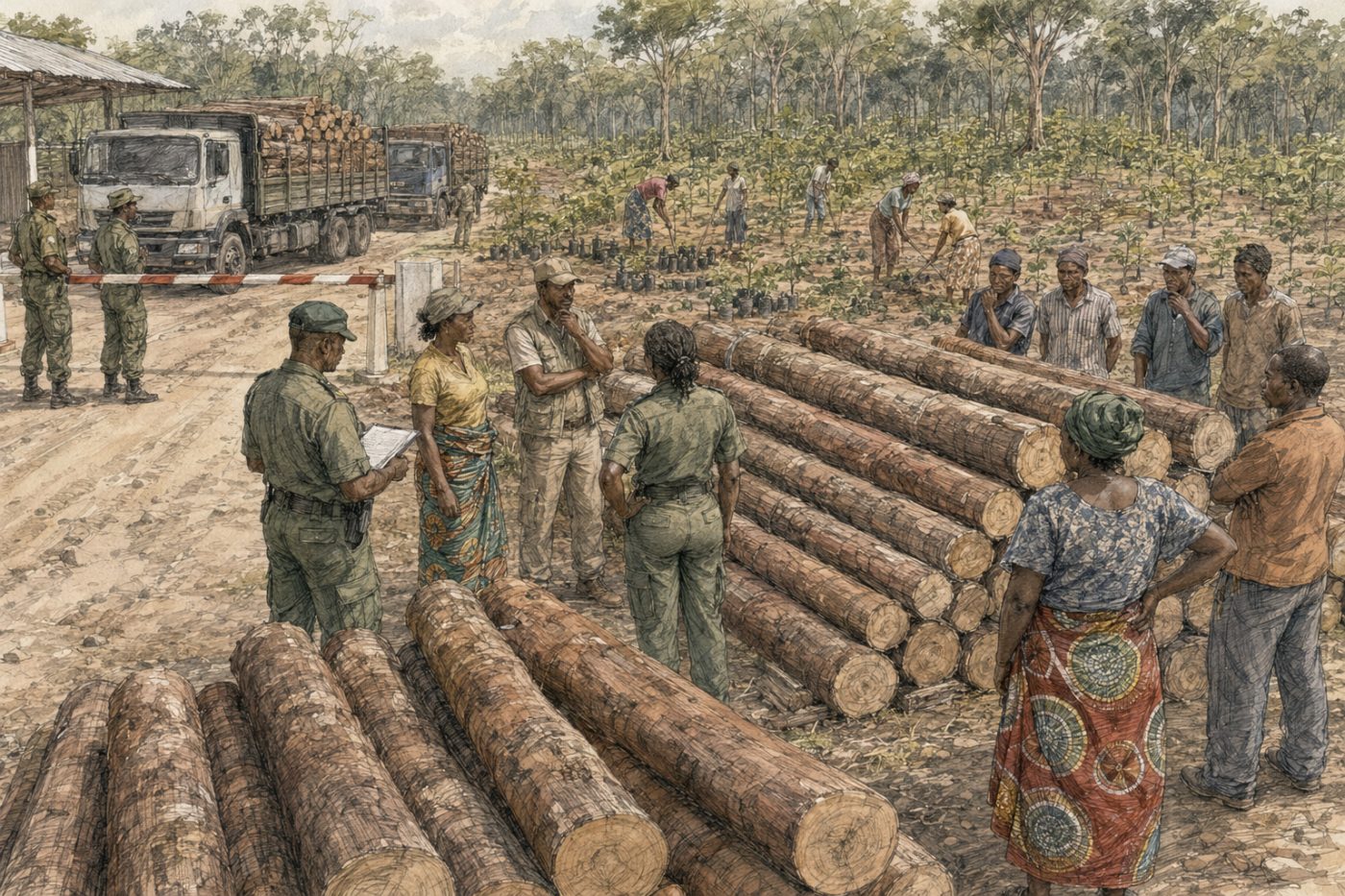
Mukula is a rare African tree and one of the rosewood species protected under the Convention on International Trade in Endangered Species of Wild Fauna and Flora (CITES). Illicit and unsustainable harvesting of this precious timber has led to the destruction of Zambian forests, with environmental activists and the international community warning of a looming extinction.
Due to the increasing risk of deforestation and biodiversity loss, in 2017 the Patriotic Front’s Minister of Lands and Natural Resources, Jean Kapata, enacted a ban on the harvesting, transportation, trading and exportation of mukula tree and mandated the Zambia Forestry and Forest Industries Corporation Limited (ZAFFICO) to auction confiscated mukula.
However, a groundbreaking report by the Environmental Investigation Agency (EIA) in 2019 unmasked the existence of a Mukula cartel involved in the illegal exportation of the natural resource primarily towards China through the port of Durban, implicating top government officials and politically exposed persons under the previous Patriotic Front government.
The report accused the mukula exportation ban to serve as a mere ‘cosmetic instrument’ to cut off the bulk of mukula exporters from the trade, while turning a blind eye to the cartel and the government officials benefitting from the illegal trade. The EIA findings indicate that the exploitation in Luapula Province began in 2017, when the land was obtained following the signing of a memorandum of understanding between the Zambia Agency for Persons with Disabilities (ZAPD) and the Ministry of Lands. Once land titles and cutting permit were secured, teams of logging contractors were reportedly hired to selectively harvest mukula under the pretext that they were clearing land for agricultural purposes. The cartel later extended its land area to harvest about 10,000 trees from an area of about 50,000 hectares of land – way beyond the original permits given to the ZAPD. According to the EIA, the operation received institutional backing from the Zambia National Service (ZNS) which facilitated the transportation and stockpiling of mukula logs at the ZNS Lwamfumu Camp. The state-owned company Zambia Forestry and Forest Industries Corporation Limited (ZAFFICO) is alleged to have used its mandate to trade logs seized from illegal traders as a cover to trade freshly felled mukula trees, in some instances under the protection of the Zambian army. ZAFFICO is also alleged to have issued fraudulent export certificates, allowing timber from the endangered trees to be exported to China. The report estimates that the illegal trade generates approximately US$7.5 million in bribes and informal fees annually. Alarmingly, the report reveals that endangered trees are also used as a currency to influence Zambian elections. Traffickers told EIA investigators that President Lungu granted mukula permits to regional chiefs in exchange for votes from their provinces ahead of the 2016 election and accepted a US$40,000 “donation” from a powerful Chinese trader to buy expensive outfits for his re-election campaign. Further investigation untangled a well-orchestrated operation involved in looting the natural resource, comprising the ZAPD, the Ministry of Community and Social Services, the Ministry of Tourism and Arts, and a Chinese-controlled Zambian company with close ties to the office of the former Vice President. High ranking individuals were found to partake in the profits from the illegal trade, most prominently the daughter of former President Edgar Lungu, Tasila Lungu, the former Minister of Justice, Given Lubinda and the former Minister of Lands herself, Jean Kapata.
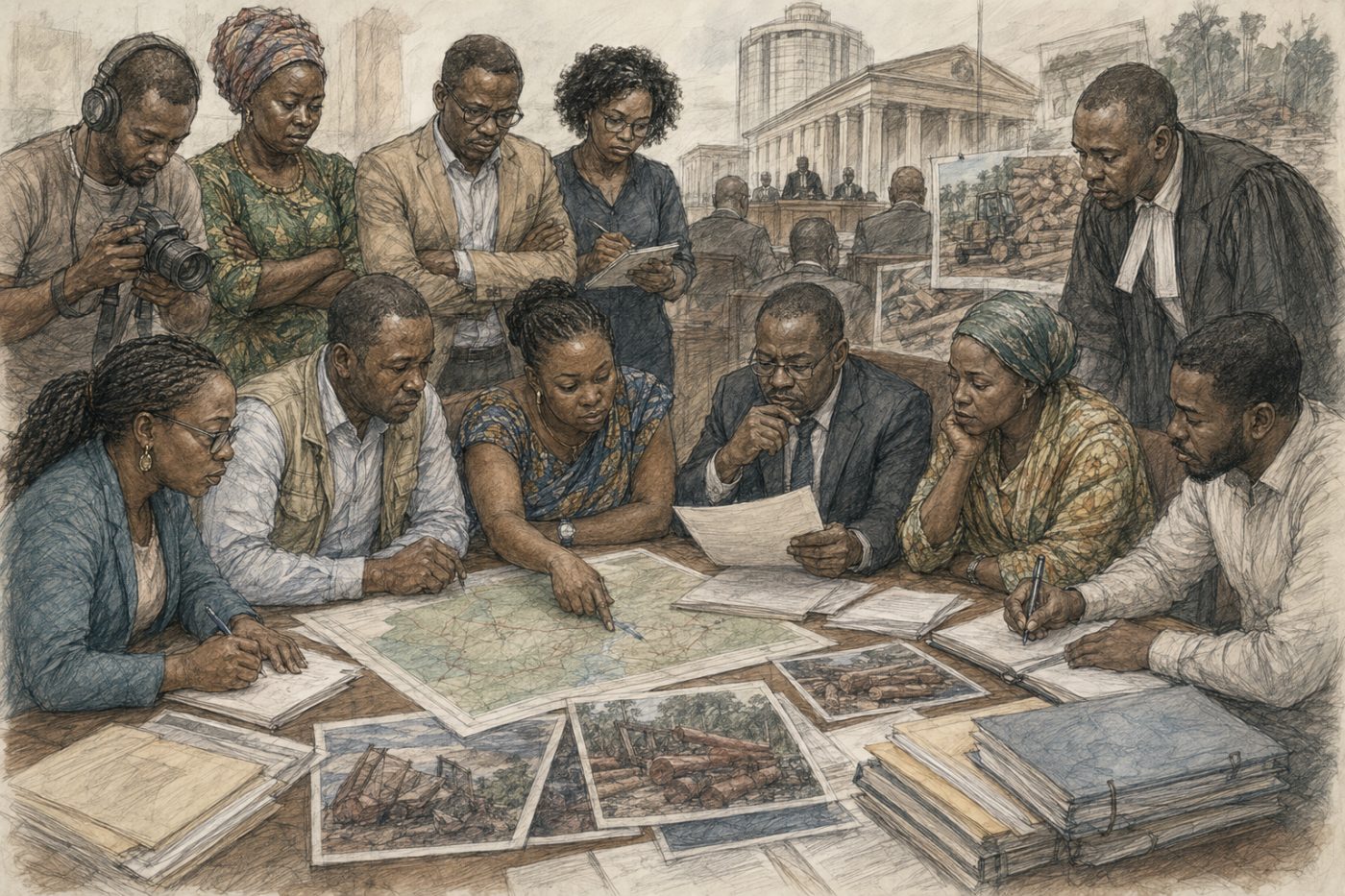
In light of such finding, EIA, TI Zambia and other CSOs called for a full investigation into the allegations and prosecute wrongdoing regardless of the rank or status of the accused. Moreover, TI Zambia called on the government to urgently enforce a complete ban on the export of mukula wood and to provide a full account of mukula traded through ZAFFICO.
Following these events, the UPND government launched an audit and joint investigation into the “Mukulagate” scandal and began to look into individual cases, more systematically so under the UPND government after the 2021 elections. A few high-profile perpetrators have been investigated, but most cases are still ongoing. In other instances, the property of suspected wrongdoers was seized on the basis of unexplained wealth.
In 2021, Tasila Lungu, Given Lubinda and Jean Kapata mounted a case against the EIA and the online news platform Newsdiggers for defamation; while Lungu later withdrew from the case, the case is ongoing and it has permitted to provide new insights and revelations from the story.
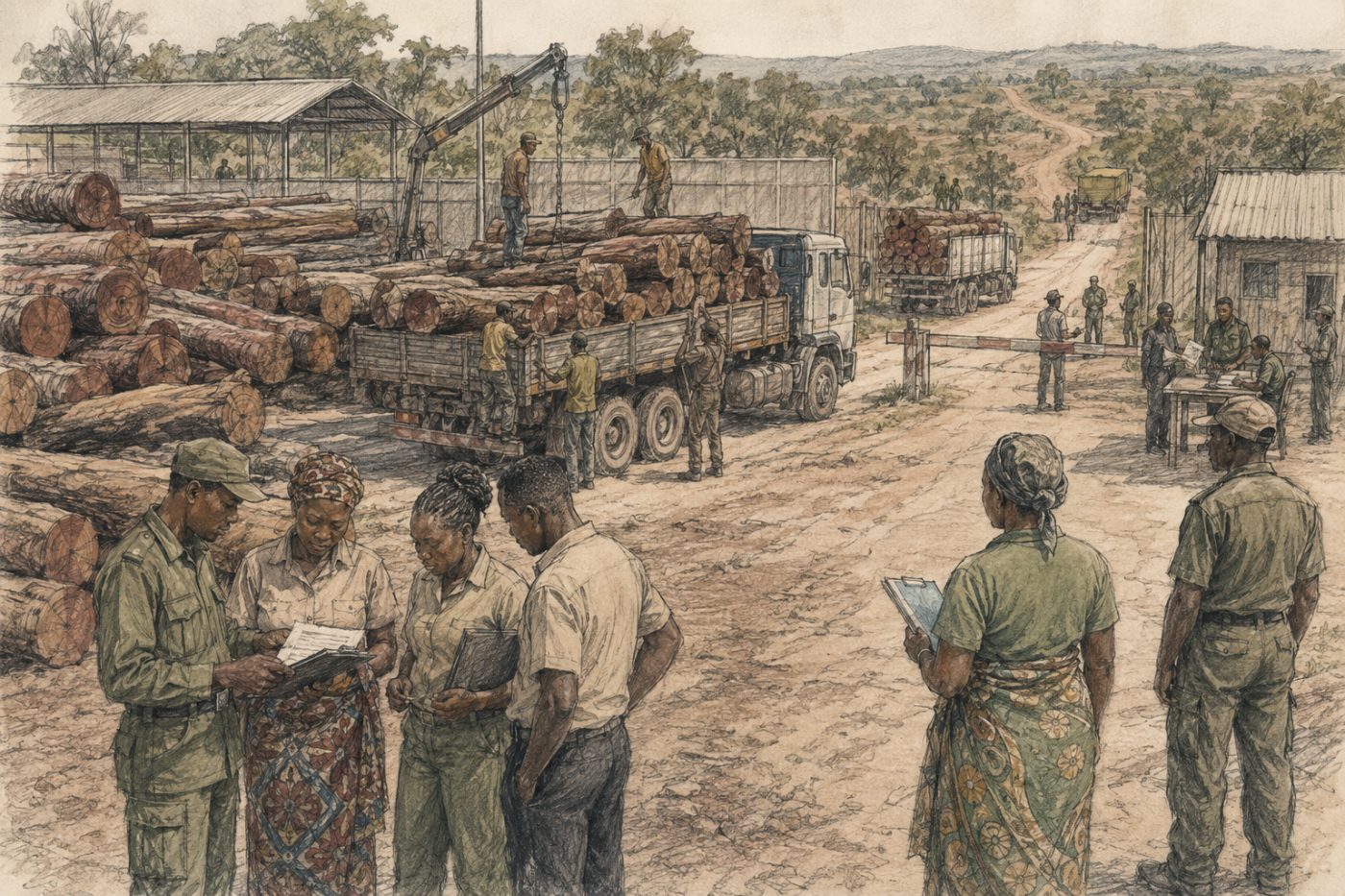
In 2021, the UPND Minister of Land and Natural Resources suspended the harvesting and export of the endangered mukula trees. Thanks to a collaboration with the ZNS, by 2023 it was reported that there had been a reduction in the illegal harvest and movement of the mukula tree. “We are rarely seeing and hearing of impounding of trucks which (before) were freely moving with illegally harvested timber” (Green Economy and Environment Minister Collins Nzovu).
The government is still to announce the mechanism to dispose-off of the illegally harvested mukula which had been seized, but there have been calls from civil society for this operation to be conducted transparently.
In 2023, the Timber Producers Association of Zambia (TPAZ) has appealed to government to lift the mukula ban (still in place since 2017), which is hurting traders’ profits and depriving government of important tax revenue. The government maintains that lifting the ban will be possible only once a proper mechanism on how to export mukula transparently has been launched.
Considering the revelations emerging from the reports and the court cases, there are now calls from civil society to set up a commission of enquiry into the mukula trade in the last ten years.
Story image set