The Degazetting of Forest 27 in Lusaka
Established in 1957, Lusaka East Forest Reserve Number 27 has been classified as a protected area: it serves as groundwater reservoir and feeds the river systems in the Chalimbana sub-catchment, supplying water to communities in Chongwe and the wider Lusaka...
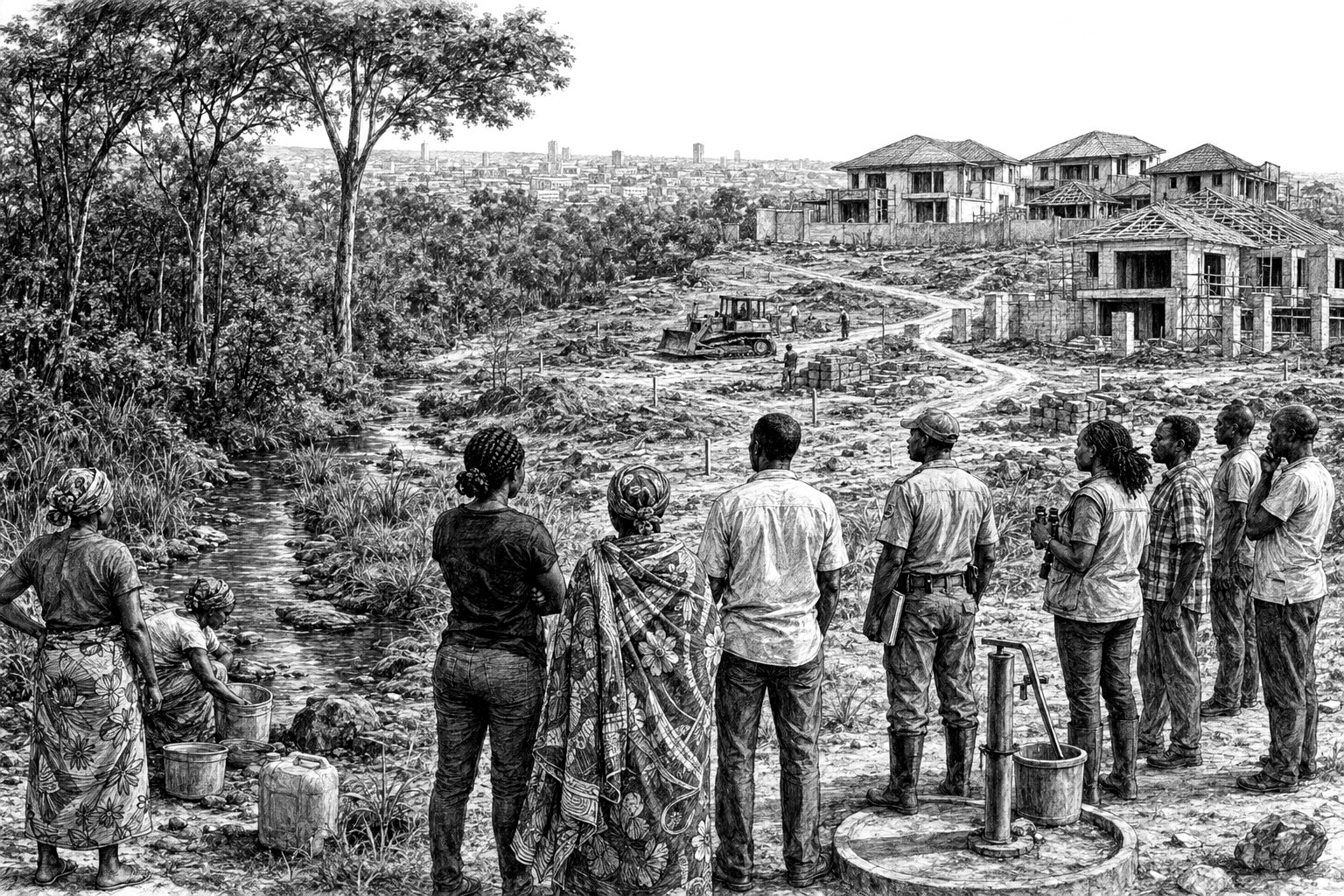 Black-and-white sketch treatment based on supplied Forest 27 reference art.
Established in 1957, Lusaka East Forest Reserve Number 27 has been classified as a protected area: it serves as groundwater reservoir and feeds the river systems in the Chalimbana sub-catchment, supplying water to communities in Chongwe and the wider Lusaka region, besides hosting great biodiversity and serving as a recreation space for the local population.
Due to its proximity to Lusaka and its natural appeal, the area was designated for a large-scale real estate and infrastructure development that would mainly benefit the Zambian elite, and Forest 27 was degazetted under president Lungu in 2017.
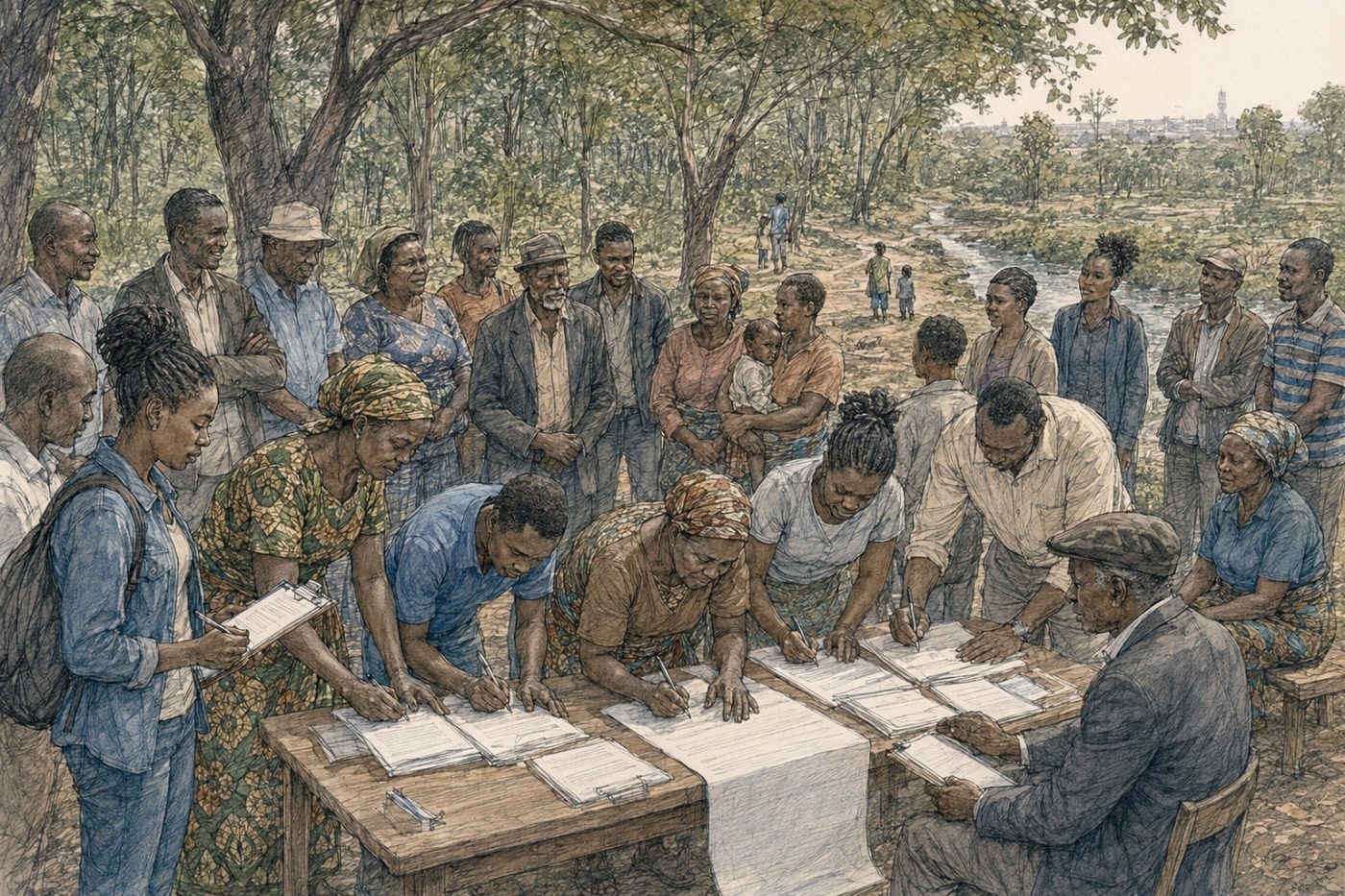
In fact, the forest had already been degazetted once, in 1993, under president Chiluba, to be used for munitions training by the defense forces. However, after 25,500 community members signed a petition, the government re-gazetted the Forest in 1996.
Unfortunately, president Lungu’s attempt was more successful at exploiting the natural public resource for private gains. Three statutory instruments (SI) were put in place to subdivide the reserve for development. SI 62 gave way for Chinese property developer Kingsland and others to bulldoze a great portion of the forest and clear land for 1,100 houses meant for the Zambia Airforce.
An even bigger real estate venture was initiated, paving the way for residential estate, with hotels, a university, hospital, police station, and other facilities. Predictably, the area development was meant to target the high-end market, government officials and politically connected persons. Among those who have obtained land in the forest reserve, records show former Vice President Inonge Wina, former Lands Minister Jean Kapata, former Mines Minister Richard Musukwa, and former Chief Justice Irene Mambilima.
This prompted widespread protests by civil society and the population, especially given Lungu’s so-called pro-poor agenda.
After the 2021 election and the change in government, developments at Forest 27 were put to a halt and the UPND commissioned an evaluation to assess how to handle the delicate issue. On the one hand, property development in the area had damaged the water supply in the area, at the expense of lower income communities. On the other hand, restoring the Forest would entail demolishing existing properties, which had been legally purchased and developed, and compensating owners.
The government is still analyzing the situation. The most recent stance has been an in-between compromise: the intention to re-gazette Forest 27 is still there, but the most viable solution is to allow the existence of already built structures in the area instead of demolishing them.
Moreover, as it was found that property owners had proceeded with construction works even after the order to halt, property owners have been invited to submit relevant documentation to prove the legality of the purchase and development of property in the reserve. The Ministry of Local Government and Rural Development also advised people to stop buying land in Forest 27 and appealed to the local authority to stop approving any building plan in this area: “anyone who is buying land now from Forest 27 is doing it at his or her own risk”.
Story image set