Lead Poisoning in Kabwe
The world’s most toxic city For much of the 20th century (1906–1994), the city of Kabwe was home to one of Africa’s most significant lead mining and smelting operations. This industry played a crucial role in driving Zambia’s economy and provided...
 Black-and-white sketch treatment based on supplied Kabwe lead story reference art.
The world’s most toxic city
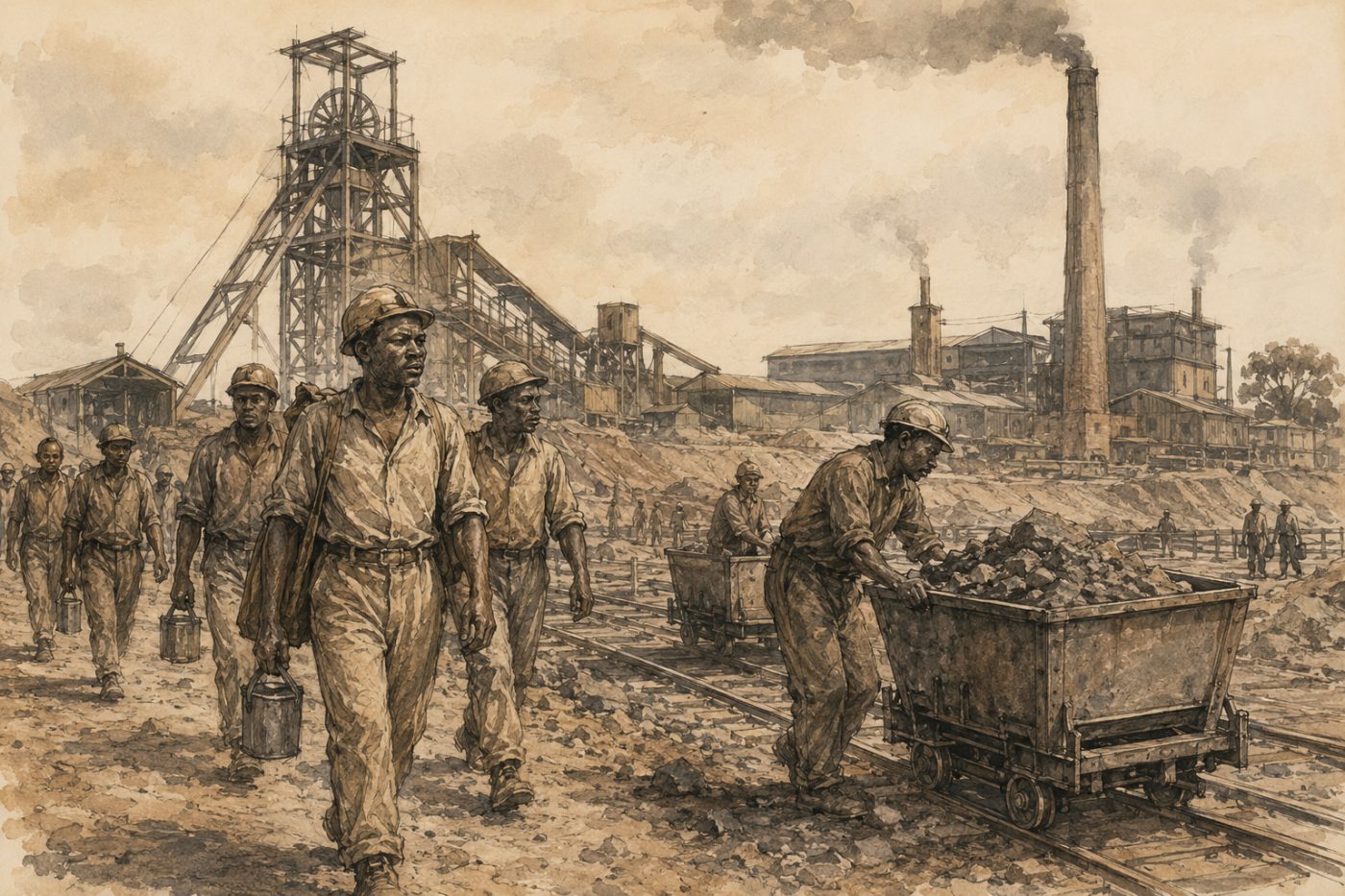
For much of the 20th century (1906–1994), the city of Kabwe was home to one of Africa’s most significant lead mining and smelting operations. This industry played a crucial role in driving Zambia’s economy and provided employment for thousands of residents. At its peak, between 1925 and 1974, the mine—operated by a subsidiary of Anglo American—was the continent’s largest producer of lead. However, following nationalization and declining global demand, production was gradually scaled down, and the mine ultimately closed in 1994.
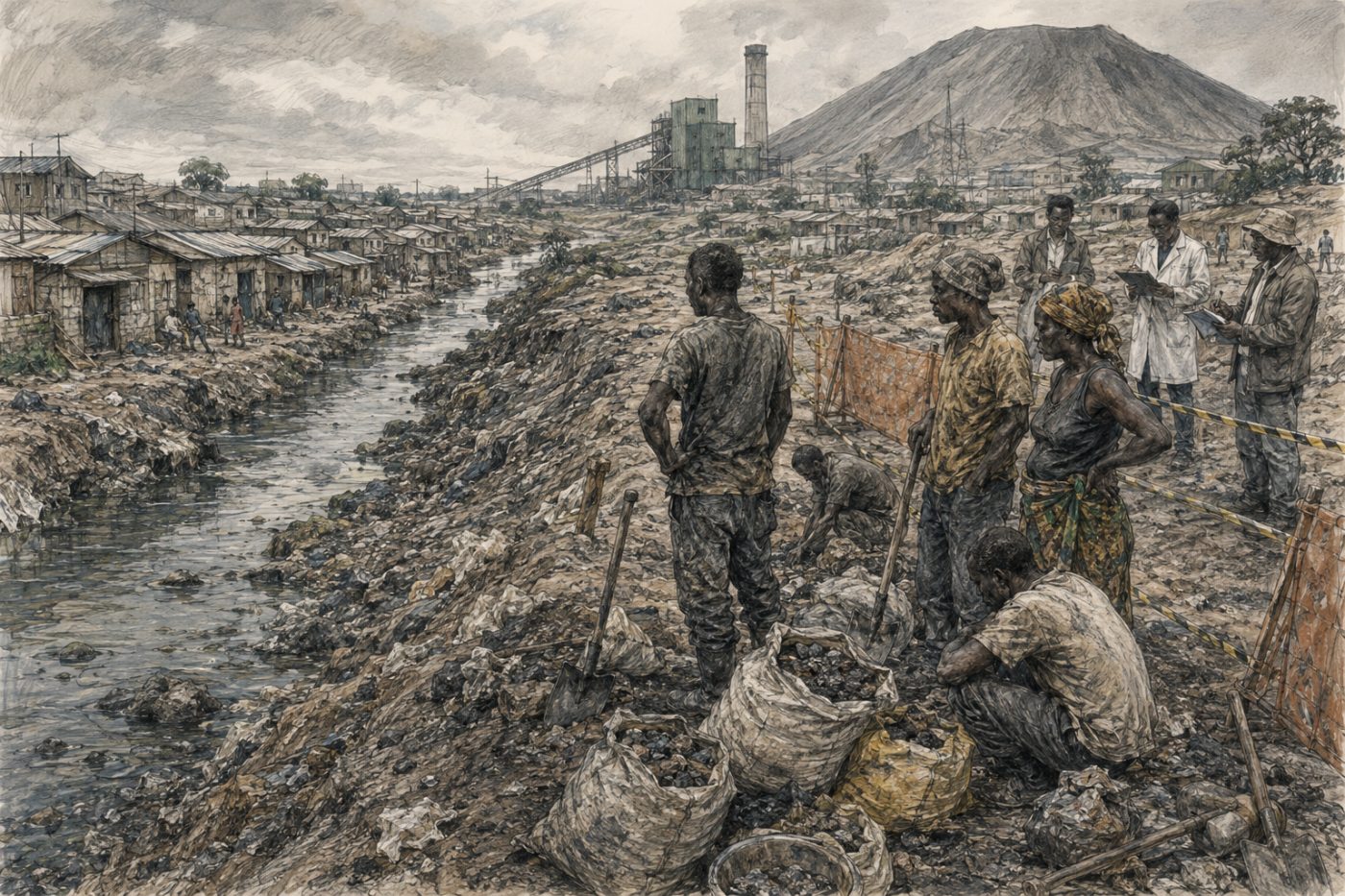
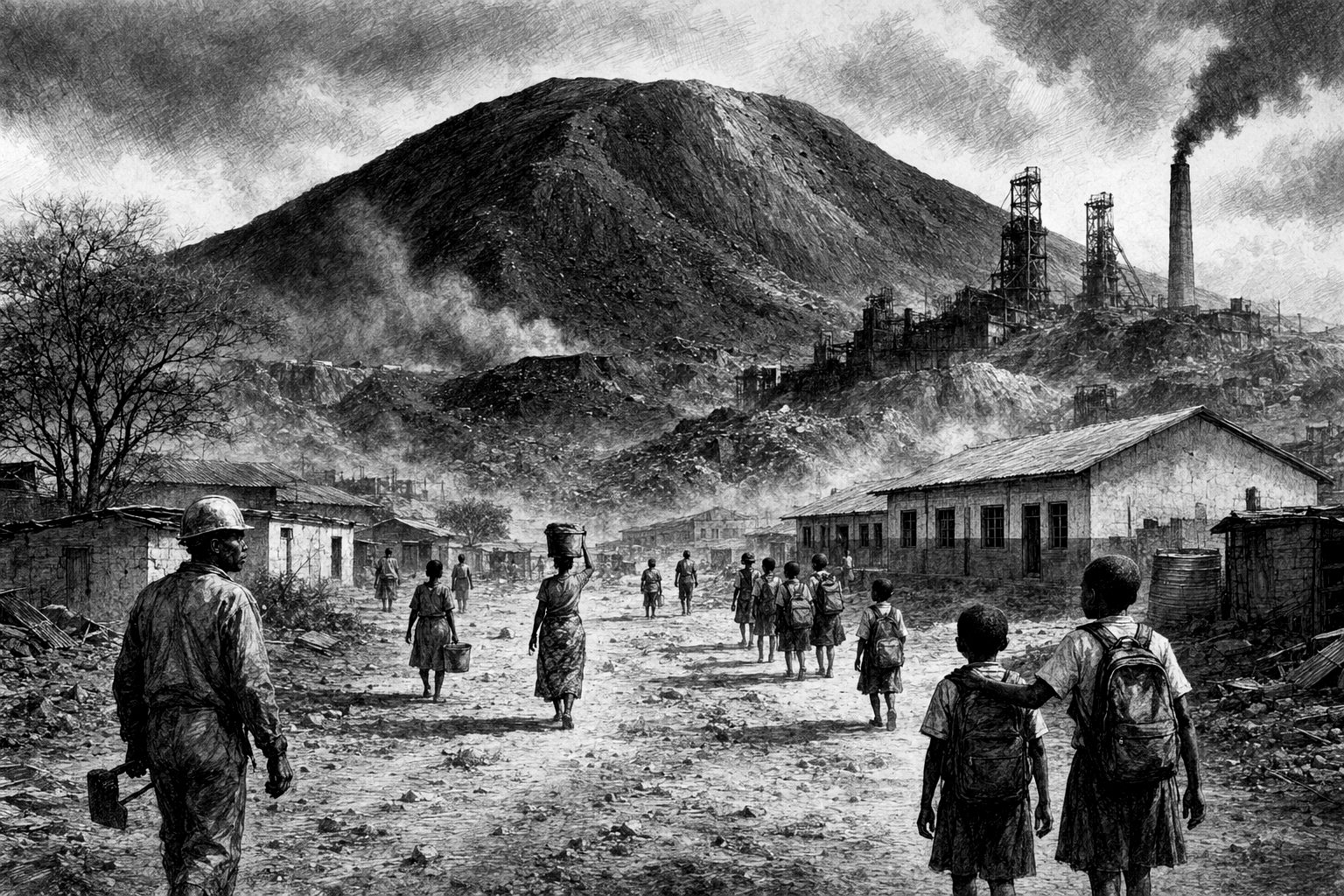
Yet the site’s toxic legacy endures. An estimated 5 to 6.5 million tons of hazardous waste remain on the outskirts of Kabwe, forming what is commonly known as the “Black Mountain.” A facility exists to reprocess some of this waste, further contributing to ongoing pollution, and informal artisanal mining continues—posing significant health risks to residents who rely on it for their livelihoods.
For over a century, thousands of residents, mine workers, and community members have been exposed to dangerous levels of lead. Blood tests consistently reveal widespread lead poisoning. Studies estimate that over 100,000 people—possibly as many as 140,000, about half the city’s population—are affected. Children are particularly vulnerable: lead exposure at a young age can severely impair brain development, hindering learning, memory, and concentration. Teachers and parents frequently report such symptoms in schools throughout Kabwe. A 2017 study found that 95% of children living in affected townships had blood-lead levels high enough to warrant hospitalization[1].
The consequences of lead exposure are devastating. It can cause irreversible brain damage, infertility, and even death. Alarm bells were already being sounded in the 1970s, when doctors noted abnormally high rates of child mortality in areas near the mine—yet these warnings went largely unheeded.
As a result of this prolonged and unaddressed crisis, Kabwe has earned grim epithets such as “the world’s most toxic city,” and the “world’s most notorious sacrifice zone”—a place where people bear the burden of environmental destruction they did not create.
Unfortunately, no straightforward solution has been put in place. Public resources remain scarce, limiting the government’s ability to address the crisis effectively. In 2016, with financial support from the World Bank, the government launched a programme aimed at providing testing and treatment for affected individuals, relocating vulnerable residents, and cleaning up a contaminated canal. However, the initiative was marred by allegations of mismanagement and negligence. Implementation was slow, and treatment services often failed to reach those most in need.
Crucially, the programme—which concluded in 2024—did not tackle the core issue: the massive volumes of lead waste still present in densely populated areas of Kabwe. As a result, new cases of lead poisoning continue to emerge, even three decades after the mine’s closure.
Story image set